{{ 'fb_in_app_browser_popup.desc' | translate }} {{ 'fb_in_app_browser_popup.copy_link' | translate }}

{{ 'in_app_browser_popup.desc' | translate }}

Occhio Talk | Why Wang Changxing Is the Most Playful Dream Renovator

About Me

My ancestral home is in Jiading, Shanghai. I grew up in a traditional Shikumen neighborhood and didn’t move out until I was twelve. That experience left a deep impression on me—the architecture, the sense of community. I’ve always loved Shanghai. It’s a city of openness and inclusion, full of opportunity. People often say Shanghai is stylish and cosmopolitan, but I believe that comes from its openness and cultural fusion. Shanghainese are naturally curious and drawn to all things new and modern. I’ve long been interested in Shanghai’s history—especially the period from 1910 to 1940, which I find most beautiful. My doctoral thesis focused on the Art Deco style in early modern Shanghai interior design.

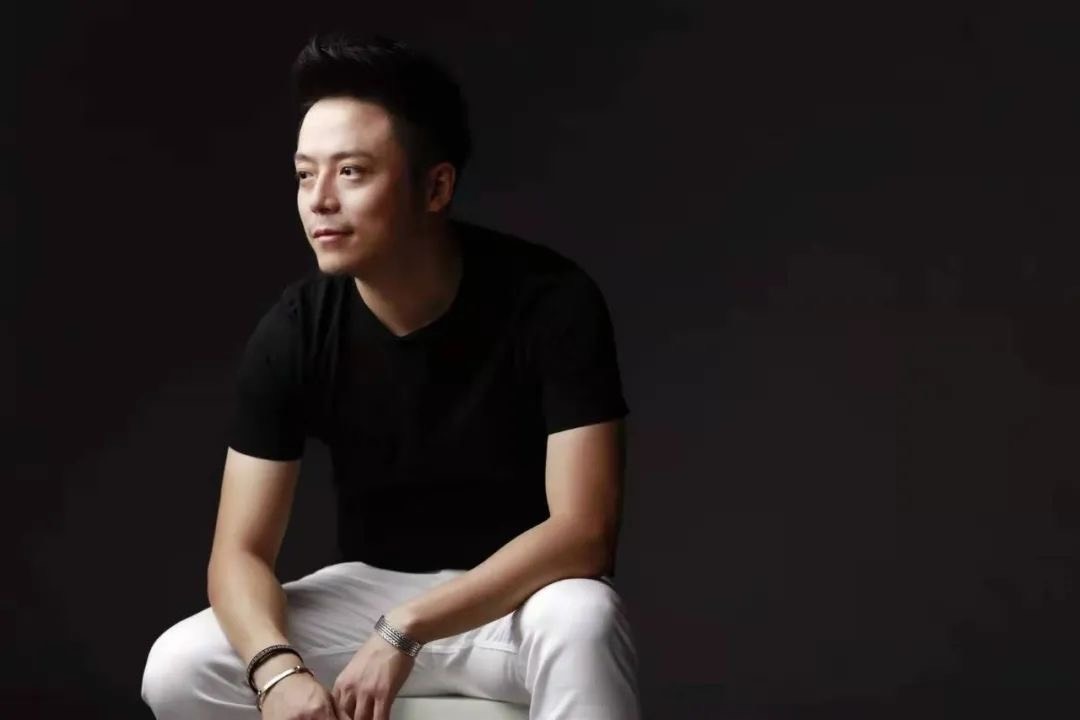
Wang Changxing, PhD
Assistant Professor, College of Design and Innovation, Tongji University
PhD in Architecture and Urban Planning, Tongji University
Visiting Scholar, Parsons School of Design, New York
Double Master’s Degrees, Tongji University & Politecnico di Milano
Member, China Interior Decoration Association
Member, China Photographers Association

I have an innate passion for things with a sense of history. Growing up in a Shikumen environment, with a father who painted traditional Chinese landscapes, our home was filled with antique rosewood furniture and steeped in a scholarly atmosphere. I actually rebelled against that in my younger years. After finishing my undergraduate studies at Tongji, I was determined to explore Western design and aesthetics. But after turning thirty, I found myself drawn back to Chinese culture with renewed love.

Understanding China’s Design Trajectory

China’s design industry is heading in a promising direction. After working at Yabu Pushelberg’s New York studio for a while, I returned to China to start my own business. I truly believe Chinese design will earn its rightful place on the global stage.

For the past 150 to 200 years, the West has dominated the discourse in global design. But China’s rise is underway. At least in Shanghai, many of the clients I meet now have far better aesthetic appreciation than the older generation. My parents’ generation would spend a million yuan on a huanghuali chair but hesitate to pay 500,000 for a designer chair because they didn’t yet recognize the value of design or branding. This mindset is shifting, and I think that’s a good sign. Today’s young designers in China are doing excellent work.

I now teach at Tongji University, and I see major changes among the younger generation—especially the post-2000 students. Their taste, awareness, and global perspective, even the courage they show in challenging you during class—it’s inspiring. It pushes me to keep learning. That’s why, after running my firm for four years, I chose to return to teaching.

Understanding Lighting

Everyone perceives light differently. For example, I can sleep with the lights on, but my wife is sensitive even to the faint glow of a phone screen. Personally, I like turning off all ambient and directional lighting at night, leaving only a few small accent lights for layered mood. It feels cozy.

Lighting accounts for 50–60% of the interior design process, in my view. And lighting involves two elements: the lamp and the light itself. Light includes both natural and artificial sources. Picture a dark box—without light, it becomes a flat, dimensionless space. But even a single beam brings volume and presence.

In the same space, different lighting techniques completely transform the atmosphere. On stage, even the same face looks emotionally different depending on the light angle.

Lighting in commercial spaces is often used to spotlight products. In homes, it’s about ambiance—and that ambiance shifts across the 24-hour day and through all 365 days of the year.

Lighting designers precisely calculate luminance and color temperature, but based on standardized research, not just individual preference. If lighting products allow users to make small, personalized adjustments, that’s when it gets fun.

What I Look for in Lighting Brands

For me, two things matter most: core product competitiveness and price range. A brand’s positioning is key. It determines whether I’ll use their products based on the client’s budget and the project’s type.

We often work on high-end projects, where lighting demands are extremely high. For example, in upscale restaurants, color rendering (CRI) and material fidelity are critical. Only the best lights can meet those expectations.

It’s essential to experience lighting products in person. A good showroom makes light the protagonist. Quality shows up in the details—you need to touch it, see it. Some lighting fixtures are so well-designed, they become statement pieces themselves.

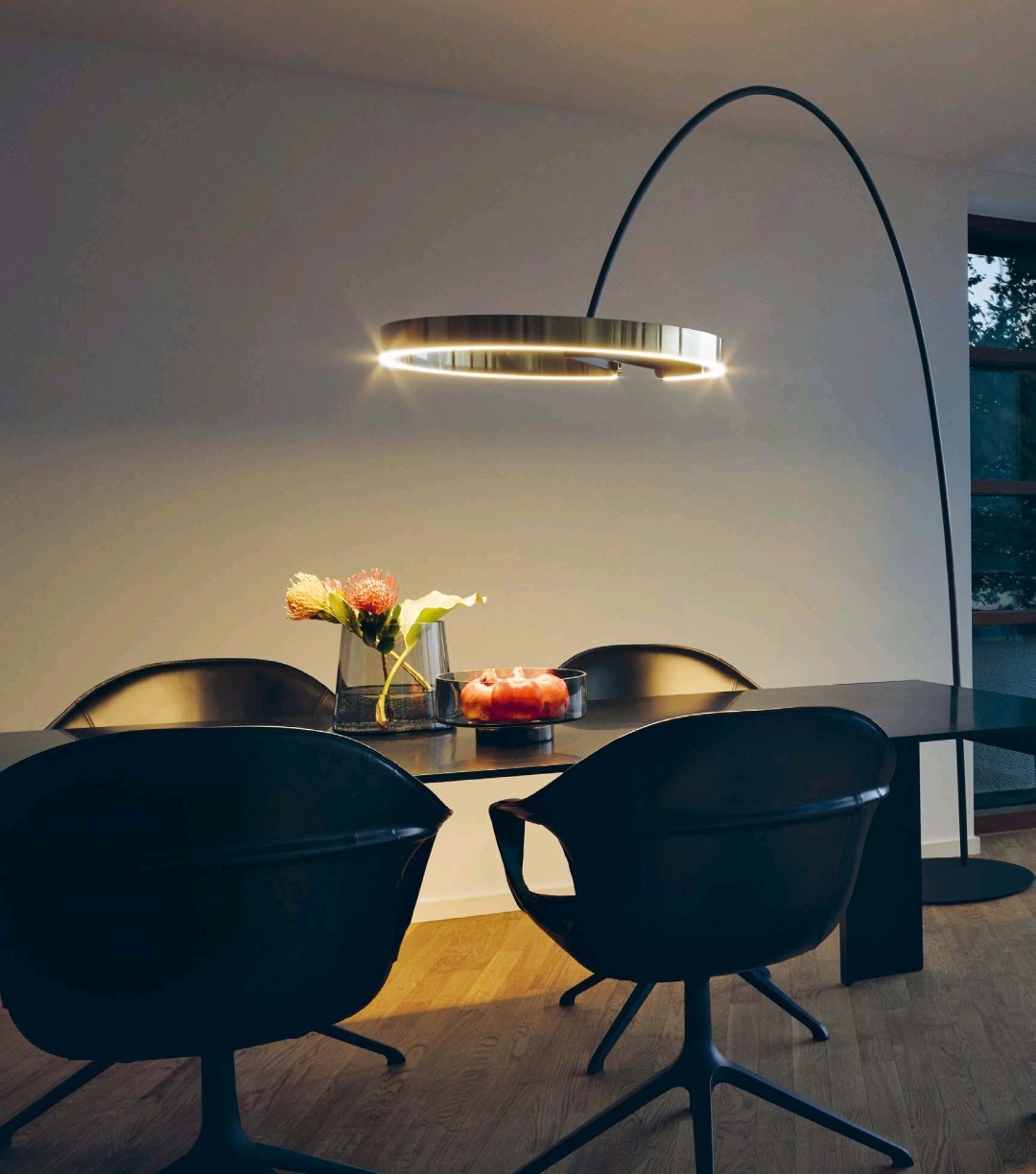
Occhio: Where would you place this Occhio floor lamp?
Wang Changxing: I’d place it in my studio—so I could use it every day.

On Interior and Lighting Design

Many interior designers today do full-scope projects and assume lighting design just means placing a few fixtures. That’s a misconception. Specialization matters. Professionals should handle their respective fields—but that doesn’t mean designers should be completely in the dark about lighting.

At Tongji, the lighting design program is led by Hao Luoxi, Vice President of the International Commission on Illumination. Her portfolio includes nighttime lighting planning for the 2010 Shanghai Expo and Hangzhou’s West Lake Scenic Area. She established the Lighting Lab at Tongji, which is deeply rooted in academic research. Her work with the medical school explores how light affects physical health—well beyond just the visual.
 

Dream Renovator

The homeowner in our renovation project was Chef Lin, a master of Minnan cuisine who grew up on Gulangyu Island. He moved away for his daughter’s education but returned years later, only to find that the island’s commercial environment had become homogenized and overly globalized—disconnected from the spirit of Gulangyu, Minnan culture, or even Fujian.

He wanted visitors to experience authentic “old-school” local flavors again. The production team invited me to lead the design transformation. It took six months—partly due to a pandemic-related pause, and also because Gulangyu doesn’t allow cars. Everything had to be transported manually. The project was a true team effort.

A Commitment to Craft

People often say I love to “play.” But for me, it’s not play for fun—it’s persistence. It’s the kind of “play” that takes things to the extreme. Photography is a great example. I shoot most of my own work. It took over a decade before I earned membership in the China Photographers Association.

Whether you're a brand or a designer, the product must be strong. No matter how good your marketing is, in the end, it’s your work that speaks. That’s what my father always told me. Whether you're an artist or designer, we are ultimately craftsmen. And among professionals—whether media or peers—everyone can see the truth in the details.